

Make Porn the Norm
Start early. Talk often. Remove shame.

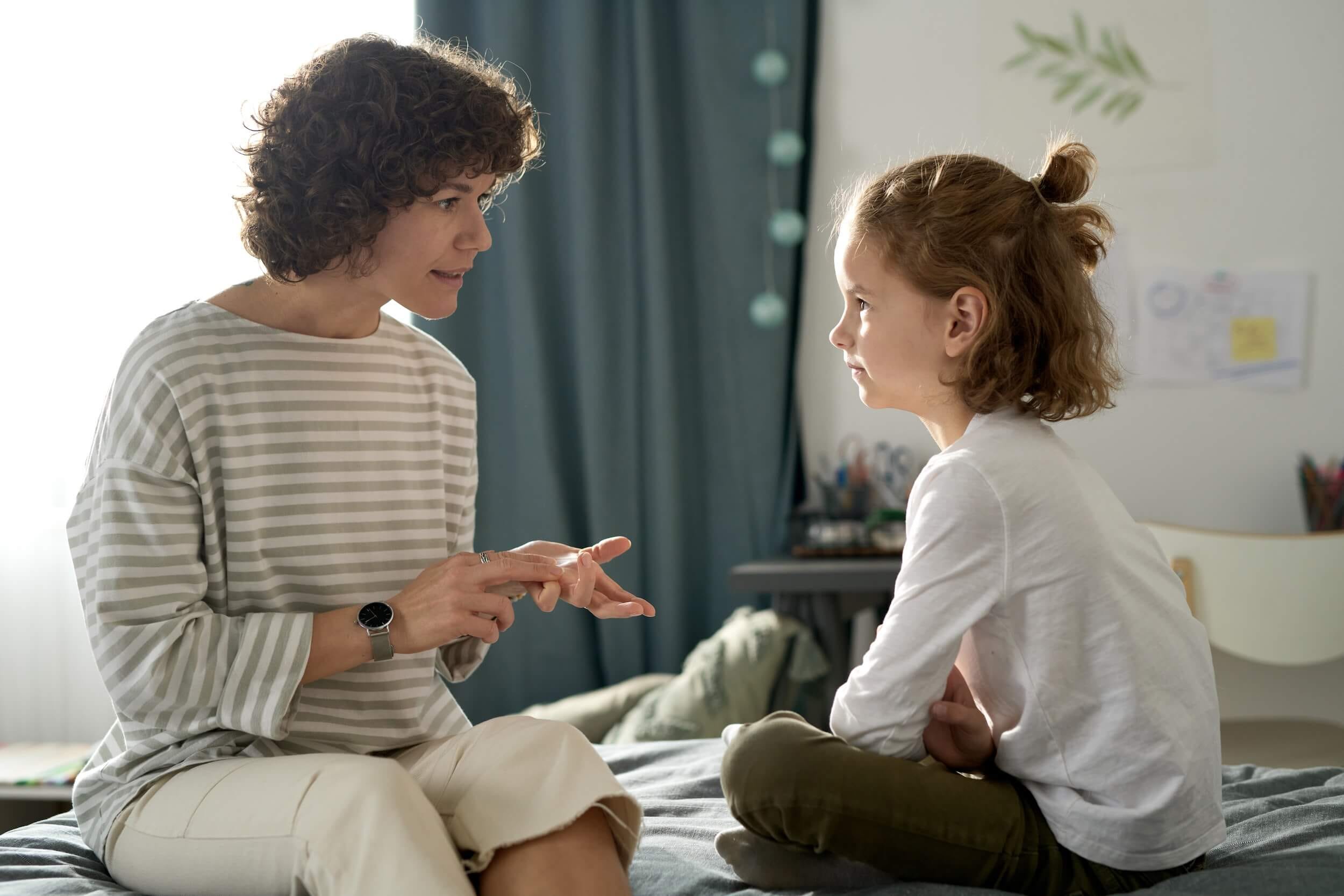
Don’t get stuck on that title, because it’s an easy one to misinterpret.
After a parent presentation, a father named Anthony asked me, “Chris, my 5-year-old likes to use our tablet. What should I say to him so he uses it well? Do I talk about pornography? What should I do?”
Here’s the illustration I gave Anthony. He might sit down with his son and say something like this:
“You know that Dad would do anything to protect you, right? Good. So just pretend for a minute. Imagine you’re out in the woods with your friends, walking down a trail, and something scary jumps out and surprises you. You’d tell me, right? Of course you would. Well, every time you use this iPad, it’s like going for a walk in the woods. The internet is full of trails — and most of them are totally fine. But sometimes something weird or scary pops up. If that ever happens, and especially if you see pictures of people without their clothes on, I want you to put it down and tell me. I will never, ever be mad at you for telling me. My job is to protect you.”
Tangible. Understandable. Foundational. This is how we make porn a more normal conversation. And open a door that needs to stay open for years.
Why Early Porn Talks Matter: What the Porn Research Shows
The evidence about pornography’s impact on children is clear — and urgent.
A 2023 meta-analysis of 27 studies involving over 16,000 children and adolescents found that those exposed to sexual content — especially violent or live content — had significantly higher odds of engaging in problematic sexual behaviors.
Boys exposed to violent pornography were two to three times more likely to perpetrate teen dating violence. For girls, pornography exposure has been linked to higher rates of depression and lower self-worth.
The content itself has also changed. Modern online pornography is increasingly extreme, frequently violent, and algorithmically designed to escalate.
“We girls learned that sex is brutal, that men are predatory and insatiable, that the only way to be loved is to become a better object.” - Freya India
Nurses, teachers, and counselors are reporting the downstream effects: children exposed to pornography often exhibit behavioral changes, distorted views of relationships, and sometimes peer-on-peer sexual aggression that traces back to what they’ve seen on screens. Consider the stories of two principals who had to expel students for touching their teachers.
Only 57% of children reached out to someone after being exposed to pornography — leaving nearly half of kids to process it entirely alone. That’s exactly why the conversations we have now matter so much. We want to be the person they turn to when it happens.
What’s the Right Age to Start the Porn Talk?
Here are my typical responses in front of a room of parents.
“I don’t know you, and I don’t know your kid, but if you wait until you feel ready, you’re too late.”
“I don’t know you, and I don’t know your kid, but they’re ready before you are, so let’s get it done!”
“I don’t know you, and I don’t know your kid, but if they’re in kindergarten and ride a school bus, they probably need to know the word.”
To give parents something tangible and memorable, we coined the phrase “10 before 10.” Ten conversations about pornography and online safety before your child turns 10. Not one big scary talk. Ten small, casual, consistent drips over the years.
There’s nothing magical about 10 talks. Your child isn’t doomed to addiction if you only get eight talks in. It was just another way to say, “You can do this!” and “Let’s get this done!”
And you often don’t even need to use the “p” word.
It can be 15 seconds in the car. It can be while hanging out. It can be “Hey, remember what we said about weird stuff on screens?” That’s it.
How to Talk to a 5-Year-Old About Porn
Is a 5-year-old ready to hear about pornography? Probably. Do you need to use the word? Probably not. Minimally, your child needs to know what to do if they see someone without their clothes on a screen — and they need to know long before it happens.
This is roughly how it went with my own son when he was five. Here’s our porn talk in the kitchen:
Dad: “The tablet can be fun, right?
Son: “Yeah!”
Dad: “So, [name], you know what your private parts are, right?”
Son: “(Giggle) Um, yep. I do!”
(He’s a 5-year-old boy, he’s been playing with them for years!)
Dad: “Good. Now, Mom or Dad should always be with you when you’re using the tablet. But if you ever see anything weird, scary, or uncomfortable on a screen — if you ever see someone else’s private parts — do you know what I want you to do?”
Son: “No, what?” (Now he’s listening)
Dad: “I want you to put it down and tell someone. That’s it. Can you say that back to me?”
Son: “Put it down, tell someone!”
Dad: “Perfect. And that means you tell me! But if you can’t find me, can you give me an example of someone you might tell?”
Son: (thinking) “Mom, Aunt Susie, Grandma.”
Dad: “Yes! Exactly. You can always tell me, okay? No big deal. I’ll never be mad.”
I just taught my 5-year-old what to do when he encounters pornography. From a spiritual perspective, that conversation also begins robbing the enemy of his curiosity power over our kids related to this topic.
Oh, and notice that I never said the word. From there, I’d check in regularly: “Hey buddy, have you bumped into anything weird on the iPad lately?” The repetition is the point. That’s what builds a reflex.
Practice Responding to Porn
One of the most underused strategies: practice the response with your child.
Don’t just tell them what to do. Run a drill. That’s what happened next with my son above.
Set your child up with a device. Tell them you’re going to your room with the door closed. Then say, “When I yell ‘ready,’ I want you to turn the tablet over, come find me, and say: ‘Dad, I saw something on the tablet that made me feel weird. Can I talk to you?’
Then do it. Have them walk through the whole sequence. Their brains need the muscle memory — not just the concept.
This is especially powerful for young kids, because abstract instructions (”come tell me”) become concrete behaviors (”walk upstairs, knock on the door, say these words”).
Porn Doorways Parents Often Miss
The entry points for pornography have multiplied. Most parents have at least some filtering in place for explicit websites, which is a great start. But here are doorways parents often miss:
Social media is now a major pipeline. That 38% of teen boys mentioned above first found porn through TikTok, Snapchat, Instagram, or Reddit — not dedicated adult sites. Even apps that appear “normal” surface explicit content through recommendations, DMs, and shared links.
Hidden browsers in “safe” apps. Even with Screen Time active and Safari disabled on an iPhone or iPad, explicit content can still surface through hidden browsers in apps — including some that sound completely harmless. Apple’s controls have serious gaps. Our incredible iPhone guide can help.
School-issued devices travel home. Ask your school what content monitoring is active — and don’t assume it’s protective.
Old devices are burner phones. That old iPhone sitting in a drawer? It connects to WIFI. It has a browser. Kids at schools I visit regularly report easy access to old devices shared among friends. Lock down your router, not just your current device.
AI companions and chatbots. A newer threat: AI “friend” apps that some teens are now using for romantic or sexual conversations. Common Sense Media reported 72% of teens are using AI companions. Some of these apps are explicitly designed to be flirtatious or emotionally intimate.
Porn is on School Buses
Once my son started riding the school bus, I introduced the actual word. He’d already learned the behavior — now he needed the vocabulary. Especially on a school bus, which is one of the riskiest places for exposure to mature digital content.
Dad: “Son, do you remember what we talked about — seeing weird stuff on the internet, like someone’s private parts?”
Son: “Sure, Dad.”
Dad: “Well, there’s a word for that. It’s called pornography. And if you ever hear a kid say that word — or if you ever see it — do you know what to do?”
Son: “Tell someone!”
Dad: “Exactly. Tell me. No big deal. Sound good?”
Son: “Yep.”
Speaking honestly and frankly is part of the ongoing process of removing shame from the word. We want our kids to feel comfortable coming to us, and that means establishing our authority through honest, crisp conversations.
Don’t underestimate the school bus! One mom named Amanda commented on a social media post, “The school bus was my first exposure to pornography in the second grade!” A lot of kids have had the same unfortunate experience on buses. Too many unsupervised devices and too many little kids. Which means your child needs to know what to do if they hear the word “porn,” or see something that makes them uncomfortable.
Be Careful with Weaponized Curiosity
I spoke with a mom who was worried about her 9-year-old daughter. Recently, mom and daughter read the book Good Pictures Bad Pictures, and afterward, her daughter started asking a lot of questions about pornography. Mom got nervous, thinking she had opened new, unhealthy curiosities in her daughter.
Another parent who used the same book sent me a DM in crisis, because she caught her son curiously searching for terms he remembered from the book.
I love that book, and it has helped thousands of families. But if you use it, be on guard. It’s most effective when the parent reading it is confident and consistent when questions come up. Also, remember that kids’ brains move on quickly. I love the phrase, “let clouds float by.” Most kids move on fast. Answer their curious questions crisply and succinctly. Don’t keep bringing it up.
From a technical perspective, keep your layers of protection strong after reading the book. Ensure all WIFI devices are connected to a filtered router. Ensure smart devices are secured and filtered. Keep technology out of private places. Be mindful of the toxic trio: bedrooms, boredom, and darkness.
Being Awkward is Better than Being Silent
You don’t need an IT degree. You don’t need to have figured out all of Apple’s settings. You don’t need to be articulate or perfectly prepared. Maybe one of these amazing books can help.
What you need to do is to start — awkwardly, briefly, imperfectly — and keep showing up for the conversation. A steady stream of water hollows out a stone.
Every parent reading this has more power than they realize. Step by step, chat by chat, you are building something that no filter can replace: a powerful connection with a child who knows they can come to you.
QUICK-START: YOUR NEXT THREE STEPS
This week, have a one-minute version of the “woods” conversation with your child — no pressure, no big setup needed
Check which devices in your home can access the internet independently (old phones, tablets, gaming consoles) and make sure your router settings cover them. Our comprehensive device guides will help.
Grab my debut book, 5 Habits of the Tech-Ready Family! It expands significantly on the ideas shared here with stories, examples, and resources.
What’s the hardest part of starting this conversation for you? Share below.
I know this was not your point but one of my one takeaways was kindergartners do not belong on the gen pop school bus 😢
Any suggestions on how to keep the conversation going with teens? I think it was relatively easier for me to talk about these topics when my kids were younger, but now that they are entering their teenage years I've found it difficult.